Being an entrepreneur is aspiring and so modern nowadays. To be a successful entrepreneur is probably everyone’s dream, but as an entrepreneur myself, there are a few things I need to tell you.
I am not always motivated to get up, put on my “entrepreneur” hat and hustle my way through the day. Life happens, and sometimes, just as any other regular full-timer, I just want to stay in bed and snuggle my dog.
However, today, I wanted to share some of the best motivational books for entrepreneurs that will keep you focused, inspired, and positive on most days. I hope you enjoy them.
Disclosure: This post contains affiliate links, which means that if you sign up or make a purchase I might get a small commission at no extra cost to you. Thank you for supporting my business. See full disclosure.
10 Top Motivational Books For Entrepreneurs
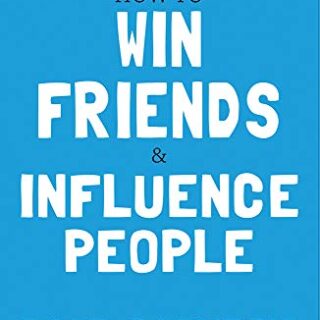
This must-read business book teaches self-improvement and becoming a better leader. “How to win friends and influence people” is one of the first self-help books ever written, however, it’s still relevant today. The book creates the building blocks of entrepreneurship, and it’s targeted towards anyone interested in business relations and self-improvement. In his book, Carnegie offers practical and essential principles that are applicable in everyday lives.
Top 3 lessons from the book:
- Don’t criticize condemn or complain. – Instead, try to understand people and why they do what they do. Try to look at things from the other person’s point of view. It’s about showing respect to get respect – treating others the way you want to be treated.
- Dramatize your ideas. – Sometimes ideas are not enough and we must dramatize them. Especially in today’s fast-paced world. There’s an example of how this almost 100-year-old book is applicable today as well.
- Be genuinely interested in oter people. – Listen to them when they talk about themselves, remember their names, and encourage them to be transparent with you. That’s how you’ll understand their interests and passions.
The 4-Hour Workweek
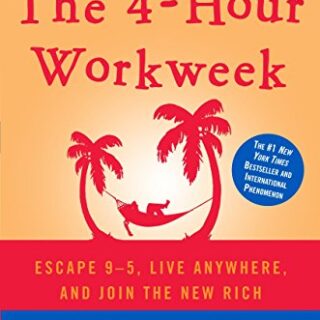
This book explains how to get out of the paradigm of the traditional workweek. According to Ferriss, people who work 9 to 5 Monday to Friday for 40 years of their lives are doomed to be unhappy and unfulfilled with their lives. He realizes the toxicity of the traditional workweek and explains how to reduce work time.
Top 3 lessons from the book:
- Avoid being overloaded with information. – Nowadays we’re overexposed to all kinds of information and entertainment. There is data coming to us from literally everywhere. This causes us to lose focus on what is important.
- Outsource small tasks. – Ferriss finds it distracting and exhausting to deal with everyday tasks. That’s why he recommends delegating them to other people. He also suggests hiring a virtual assistant. That’s how you can focus on what’s important.
- Be proactive. – Emails are controlling our actions every day. We have our inboxes open at all times and once we get an email we immediately open it and start working on it. Ferriss encourages us to take control by limiting our time on such platforms and having a scheduled time to respond to emails.
Good to Great
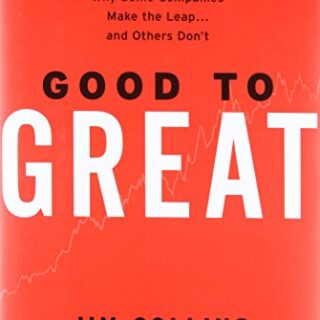
This book is for anyone striving to lead an organization that represents excellence. According to Colling, “Good is the enemy to the great”. He examines the difference between good and great organizations. His research found out that a key element to greatness is disregarding personal humility and focusing on professional will.
Top 3 lessons from the book:
- The Hedgehog Concept – The main component of Collins’s framework requires organizations to base their strategy on three dimensions: 1. What you can be best in the world at, 2. What drives your economic engine, and 3. What you are deeply passionate about.
- A culture of discipline – According to Collins hierarchy isn’t necessary. In a culture of discipline, the right systems are in place and at the same time, there is sufficient freedom for people to deliver results.
- The Flywheel and Doom Loop – The book explains that there’s a common mistake that many companies do when they’re making a leap from good to great. They think that there should be one magnificent moment or a grand program that will make them one of the best. While in fact, it all comes down to consistency.
The $100 Startup
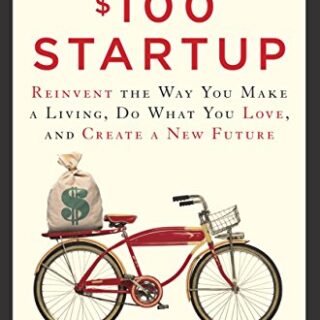
Guillebeau devoted his book to those with high aspirations and shallow pockets. As you can guess from the title, the book suggests that anyone can start a business with just $100. “The $100 startup” isn’t reinventing the wheel. However, what makes this book different from most is that it’s example-driven, and it gives practical tips rather than passive visualizations or wishful thinking.
Top 3 lessons from the book:
- Choose your battles. – Follow some passions (but not all). You do need to feel some attachment to what you’re doing but be selective about it. In other words, you should find a convergence between passion and value.
- Divide your time between work and talk. – You shouldn’t only focus on getting the job done. Working hard is important but spreading the word is equally crucial. Guillebeau calls that “the gentle art of self-promotion”. What he also recommends is to keep two lists in front of you at all times – what you need to accomplish, and who you need to keep up with.
- Focus on organic growth – Traditional advertising might work but all the success stories in Guillebeau’s 3-year study grew their business through word of mouth. Of course, you need to make a great product or service first.
The Hard Thing About Hard Things
Being an entrepreneur isn’t easy. In fact, it might be incredibly challenging. And the hardest part is to run your business once things get going. Many business books make entrepreneurship sound simple and almost a fun project. While in this book, Horowitz highlights the difficulties of managing a company rather than focusing on the positive side of things.
- Learn stress management – Being a CEO involves complex strategic decisions with limited information. This could result in stressful situations. And as a leader, you need to be able to handle that stress. You have to be adaptable to the fact-pace business environment.
- Invest in training – You have to invest time and money to train your team because that’s the only way they can perform better. Horowitz suggests functional training. This means that your employees should be taught productivity, performance management, product quality, and retention.
- Fear isn’t always bad – Horowitz points out that leaders shouldn’t be afraid of being afraid. He says “It taught me that being scared didn’t mean I was gutless. What I did mattered and would determine whether I would be a hero or a coward.”
Shoe Dog
Shoe Dog, the story of Nike’s brand written by its founder where Knight offers a new perspective on the company. The book’s structure is interesting – chapters are organized by year, and much of the book is spent on the first 10 years of the company. Keep in mind that although this book is incredibly inspiring, it’s still a memoir. You can find good examples of running a business, but they’re not formulated as tips or systematic approaches that you can implement in your business.
Top 3 lessons of the book:
- There’s a fine line between success and failure – Working hard is essential, a good team is important, determination plays a role, but luck can decide the outcomes. At the same time, Knight also thinks that the harder you work the more luck you’ll be.
- Success is for those who fight for it – Knight shares that the secret to growth is knowing how to react to uncertainty. Nike was on the verge of bankruptcy several times, got sued by the US government, and had a financial crash. How did they get out of it? Presidency. He said, “Someone may beat me, some banker, creditor or competitor may stop me, but I swear to God they will have to bleed to get me to stop.”
- Purpose is built over time – When Nike first started Knight was asked by his investors about his purpose. That’s when he started visualizing and imagining the future of his company. Therefore, his purpose didn’t drive his company from the very beginning. It was absent in the early years but he managed to build it over time.
When: The Scientific Secrets of Perfect Timing
Everyone knows that timing is everything. But we don’t know much about timing itself. Pink believes the quality of the decisions we make is closely linked with their timing. In his book, he combines research on cognitive functions with business. The book is a fascinating study of timing with thought-provoking facts and ideas. It’s also a practical guide – “not a how-to but a when-to”.
- Take conscious lunchbeaks – The most powerful lunch breaks have 2 key ingredients — autonomy and detachment. Autonomy means to exercise control over what you do, how you do it when you do it, and whom you do it with. Detachment from work, both psychological and physical—is also critical.
- Figure out when you’re the most active – Are you a morning lark, night owl, or third bird? To find that out, identify the midpoint of your typical night’s sleep, halfway between going to sleep and waking up. That can help you to identify times of peak performance during the day.
- Take naps – This might sound wrong but naps might increase productivity. Identify your optimal nap time, create a peaceful environment, set your phone timer for 25-minutes, and rest. You’ll quickly notice the difference.
Founders at Work
The book includes interviews with founders of companies and services we all use. Its goal is to give examples of how those companies started. Livingston wrote her book as an informational piece. However, it’s incredibly inspiring. It’s like reading 30 biographies of famous entrepreneurs and finding out directly from their mouths how they did what they did.
Since the book has a rather different structure, instead of giving you “Top 3 lessons” from it, here are the top 3 quotes from founders.
- “A business plan is nothing more than your own communication to a person not sitting in front of you-an an imaginary person who will read it. Try to answer every possible question that that person could raise.”, Sabeer Bhatia, cofounder of Hotmail
- “Know yourself. Try to do as much thinking upfront as to what your breaking points are. One of the things I think I did well was that I never spent any time thinking about quitting or any of these doomsday scenarios”, Tim Brady, the first non-founding employee of Yahoo
- “To get strong co-op students, you had to start early because, by the second year, you’ve lost them already to some other company. So we started hiring first- and second-year students, knowing that they were not really going to be full-time employees for 3 to 4 years after that.”, Mike Lazaridis, cofounder of Research in Motion
The Power of Habit
This book explores how habits are formed and what influences them. Duhigg discusses how habits produce the desired result, whether intended or not. He goes against the saying, “you can’t teach an old dog a new trick”. In a nutshell, Duhigg explains that the “Habit Loop” is where a cue is received, a pattern of behavior is performed, and the individual is rewarded. And that’s how you create a routine.
Top 3 lessons from the book:
- You can remove a habit – To change a habit, you must keep the old trigger, and deliver the old reward, but insert a new routine. Almost any behavior can be transformed if the cue and reward stay the same.
- You can encourage a habit – The effectiveness of the reward, not the behavior itself, drives future behavior. So set up rewards that you really want to motivate yourself into repeating habits.
- Look for a group seeking the same habit – According to Duhigg ‘Belief is easier when it occurs within a community. So find individuals who strive to achieve the same (or similar) habits as you.
Hacking Growth: How Today’s Fastest-Growing Companies Drive Breakout Success
Growth hacking isn’t a far-fetched concept anymore. But believe it or not, there was a time when Pinterest was a niche website used only by bakers, and Facebook was MySpace’s sorry step-brother. So how did these companies grow from these humble beginnings into the powerhouses they are today? This book explains the carefully implemented methodology behind most corporations today and what made them so successful.
Top 3 lessons from the book:
- Optimize your meetings – To shorten your meetings, every team member describes and scores their ideas before the meeting. Use the ICE (impact, confidence, ease) methods to do so.
- Your product is the key to your growth – Step 0 in growth hacking is making sure you have the right product to experiment with. To test that use one question only: How disappointed would you be if this product no longer existed tomorrow?
- To grow you need a growth team – The authors suggest a strict team structure for your growth-hacking team. This involves a growth lead, a product manager, a developer, a customer success manager, and a marketing specialist. These people will help your business develop by the second. So invest time and money in them.
Pin this for later

10 Top Books Successful Entrepreneurs Read

Blogger, dreamer, procrastinator, and lover of everything soul-touching. My mission is to make you laugh, provoke your thoughts, light up your day and inspire you to fall in love with life and yourself.